
Find Public Records in Colorado
Colorado public records include court files, vital records, business filings, and government documents held by state agencies and county offices. Anyone can request these records under the Colorado Open Records Act. You can search online through state portals, visit local offices in person, or submit written requests by mail. Most records are available to the public, though some have access limits set by law.
Colorado Public Records Quick Facts
Colorado Open Records Act
The Colorado Open Records Act, also called CORA, governs access to public records in Colorado. Found in C.R.S. §§ 24-72-201 to 24-72-206, CORA declares that all public records shall be open for inspection by any person at reasonable times. This law applies to state agencies, counties, cities, and other government bodies across Colorado. You do not need to be a resident to request records. You do not need to state why you want them.
Under CORA, a public record includes any writing made or kept by a state agency or local government for use in the exercise of functions required by law. This covers emails, reports, contracts, meeting minutes, financial records, and much more in Colorado. Most records are public unless a specific law says otherwise. Some types of records are exempt, such as personnel files, medical records, trade secrets, and certain law enforcement files. The agency must cite a legal reason if it denies your request in Colorado.
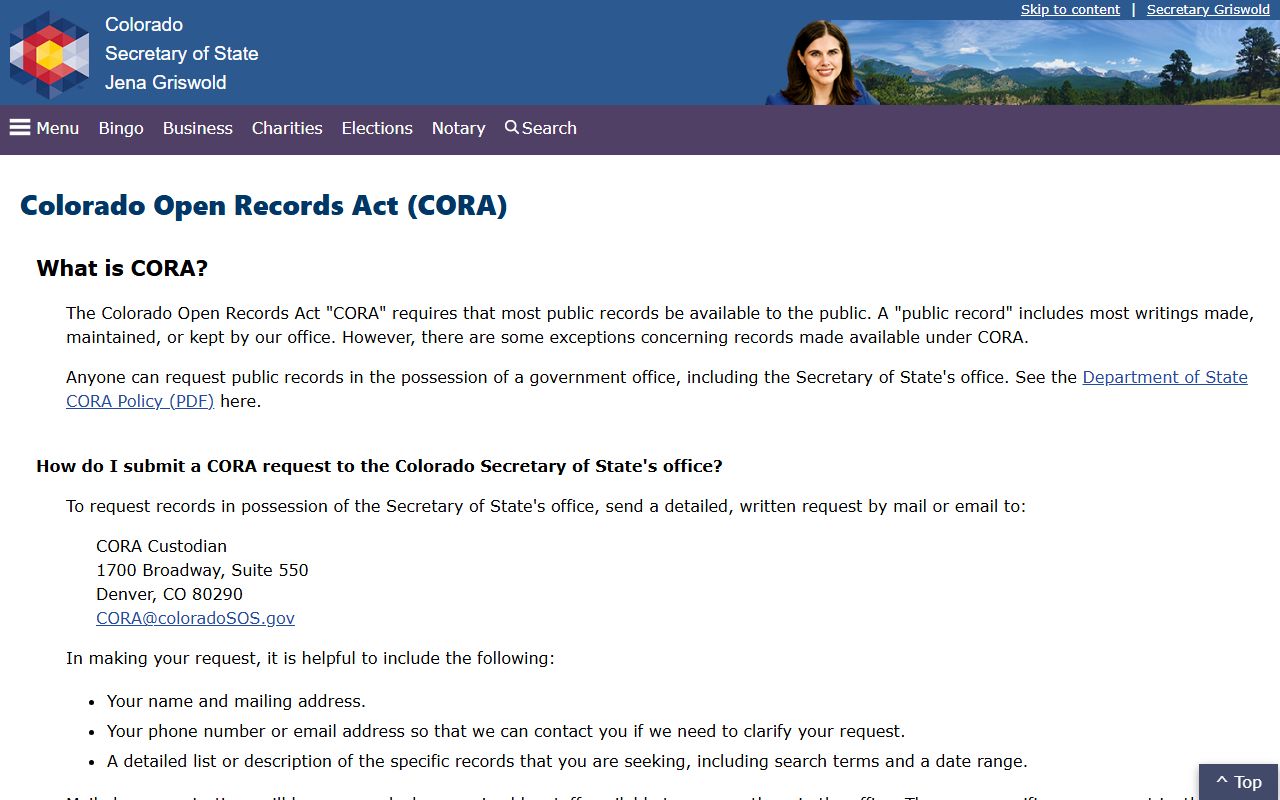
The Colorado Secretary of State provides guidance on how CORA works and how to submit requests. Each state agency has a records custodian who handles CORA requests for that office. You must send your request to the right custodian. There is no central repository for all public records in Colorado.
Agencies must respond within three working days. They can extend this by seven more days if they need extra time to gather records. If your request is denied, the agency must tell you why and cite the law that allows them to withhold the records in Colorado.
State Agencies and Records
Many state agencies hold public records in Colorado. The Secretary of State keeps business entity records, UCC filings, charitable solicitations, notary records, lobbyist records, and campaign finance filings. You can search business entities and UCC filings online for free. For other records, submit a CORA request by email to CORA@coloradoSOS.gov or by mail to 1700 Broadway, Suite 550, Denver, CO 80290. The office responds within three working days and charges fees for research and copies in Colorado.
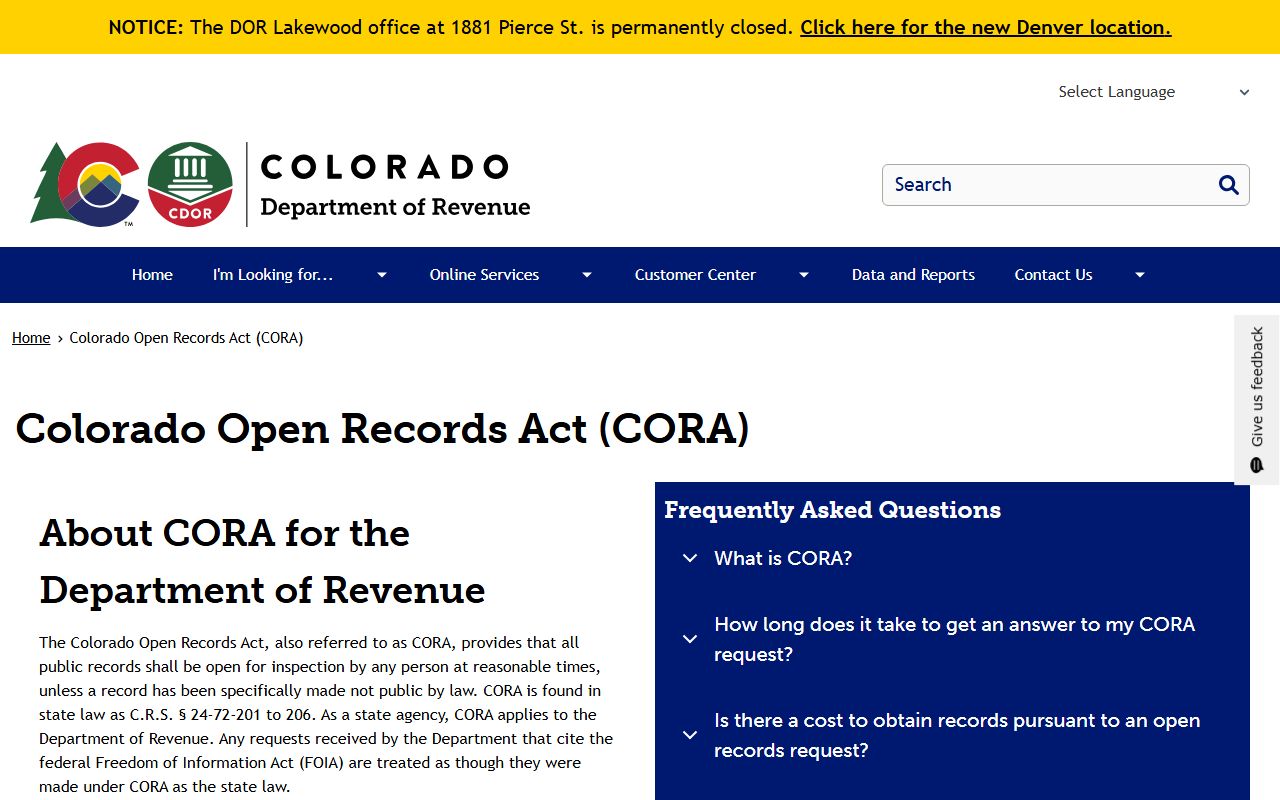
The Colorado Department of Revenue handles tax records, motor vehicle registrations, and driver license files. Most of these records have privacy protections under state and federal law. You can request records through the DOR online portal. The department follows CORA rules for response times and fees. Some records may be withheld to protect taxpayer privacy in Colorado.
The Colorado Department of Public Safety oversees several divisions that hold public records. These include the Colorado Bureau of Investigation, the Division of Fire Prevention and Control, and the Division of Homeland Security. Each division has its own records custodian. You can submit CORA requests through the department website or by mail in Colorado.
The Colorado Office of Information Technology manages many state technology systems and contracts. You can request records by email to oit_cora@state.co.us or by mail to 1575 Sherman Street, Denver, CO 80203. The first hour of research and retrieval is free under CORA in Colorado.
Colorado Court Records
Court records in Colorado are available through the Colorado Judicial Branch. The state does not offer direct online access to court records through its own website. Instead, you must use third-party vendors or visit the courthouse in person. Three vendors provide online access to Colorado court records for a fee: Background Information Services (BISI), LexisNexis Colorado Courts Record Search, and Tessera Data. These services charge per search or per subscription in Colorado.
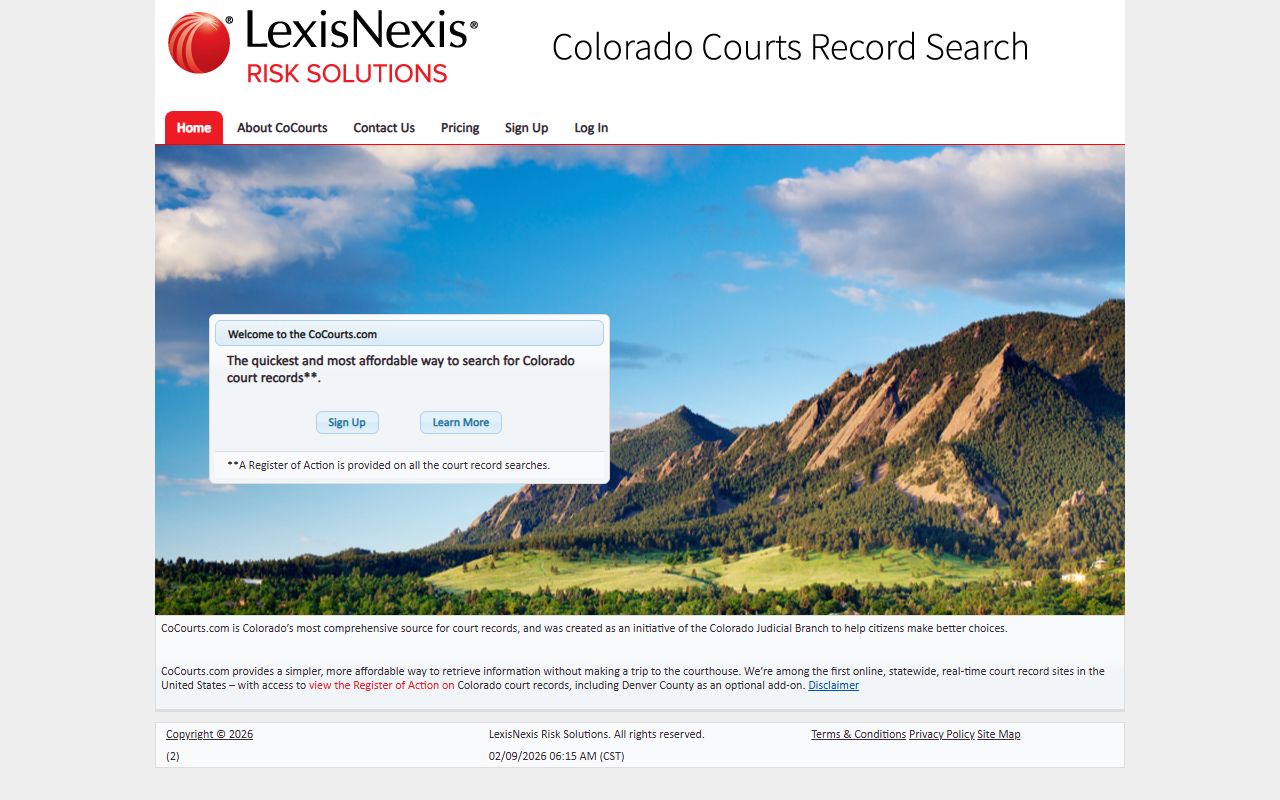
The LexisNexis Colorado Courts portal is one option for searching court records online. You can search by name or case number to find civil cases, criminal cases, traffic cases, domestic cases, and small claims. The service shows case information and docket entries. You can view documents for an extra charge in Colorado. This system covers most county and district courts across the state.
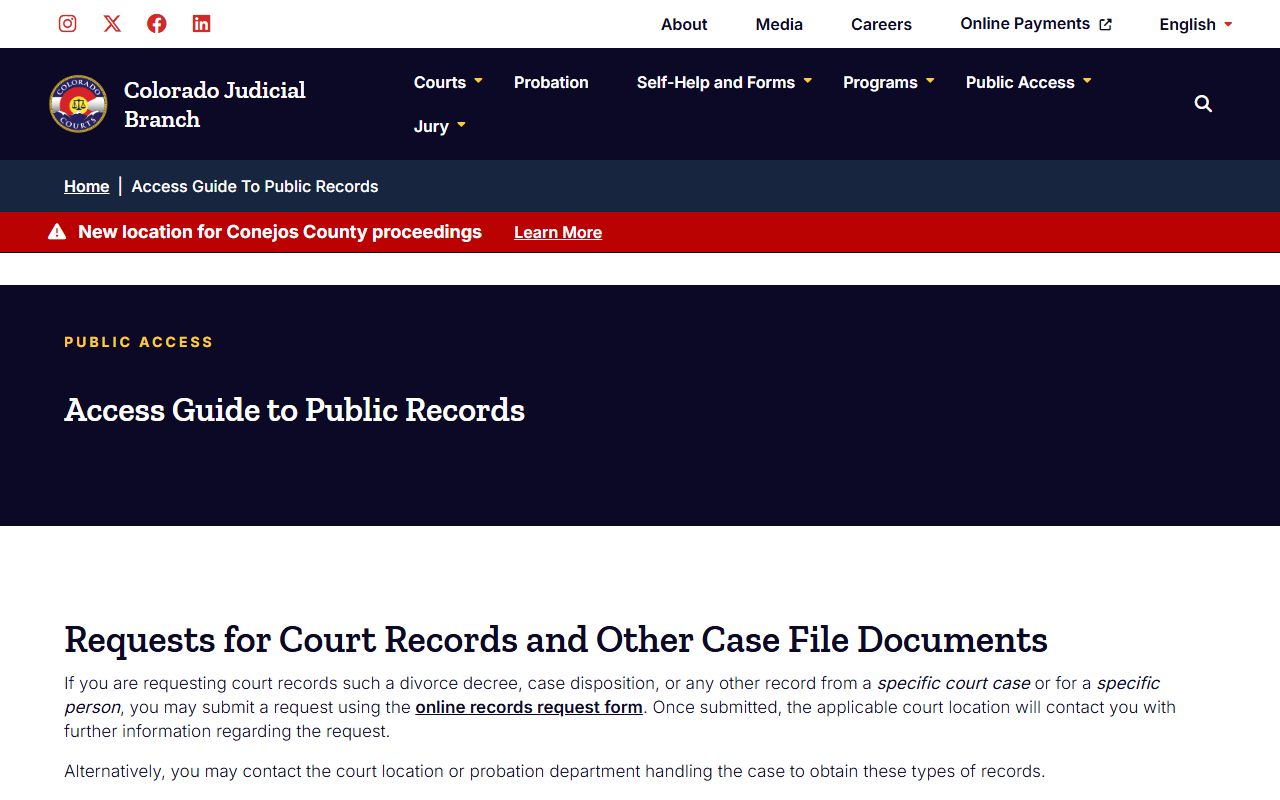
To get copies of court records or request case files, contact the clerk of court in the county where the case was filed. You can also submit a records request to the State Court Administrator's Office at 1300 Broadway, Denver, CO 80203, or by email to public.access@judicial.state.co.us. The court charges fees for copies and research time. Certified copies cost more than plain copies in Colorado.
Denver County Court operates separately from other county courts in Colorado. For Denver County Court records, email coradatarequests@denvercountycourt.org or mail your request to 1437 Bannock Street, Attention: Record Request, Denver, CO 80202. The court follows CORA rules and charges fees based on state guidelines in Colorado.
Vital Records in Colorado
Vital records include birth certificates, death certificates, marriage records, and divorce records. The Colorado Department of Public Health and Environment keeps birth and death records. You can order certified copies online, by mail, or in person at county health offices. Birth records go back to 1910, with some counties having older records. Death records start in 1900 in Colorado.
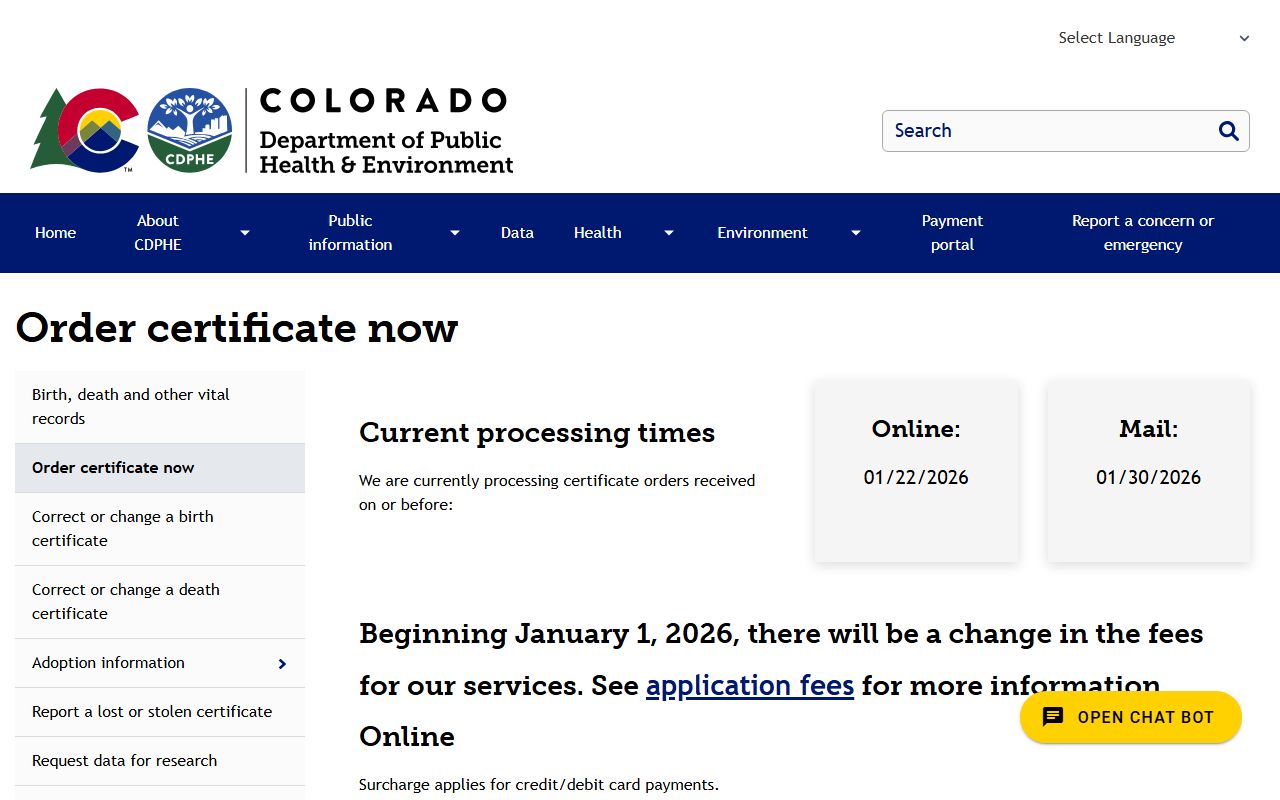
Birth certificates cost $20 for the first copy and $13 for each extra copy in the same order. Death certificates have the same fee schedule. You must show photo ID when you request a vital record. Only certain people can get certified copies of birth and death certificates. These include the person named on the record, immediate family, legal representatives, and others with a direct interest in Colorado.
For marriage records, contact the county clerk where the marriage license was issued. The state health department does not issue certified marriage certificates. They can verify that a marriage took place for a fee of $17. The same applies to divorce records. Get certified divorce records from the clerk of the district court where the divorce was granted in Colorado. The state can verify a divorce but cannot provide the full decree.
The Vital Records Section is at 4300 Cherry Creek Drive South, HSVRD-VS-A1, Denver, CO 80246-1530. Call 303-692-2200 for recorded information. Wait times for mail orders are about two weeks. In-person requests at county offices may be same-day if the record is found in Colorado.
Criminal History and Law Enforcement Records
The Colorado Bureau of Investigation maintains the state criminal history database. This database holds arrest records based on fingerprints for crimes committed in Colorado. You can request a criminal history check through the Internet Criminal History Check System at cbirecordscheck.com. The online cost is $5 per search. Mail-in requests cost $13 in Colorado.
CBI records do not show arrests without fingerprints, out-of-state convictions, warrant information, sealed records, or juvenile records. For a full picture of criminal history, you may need to check court records as well. Police reports and other law enforcement records are governed by the Colorado Criminal Justice Records Act found in C.R.S. §§ 24-72-301 to 24-72-309. Some of these records are public, while others may be withheld during active investigations in Colorado.
To request law enforcement records, contact the police department or sheriff's office that created them. Each agency has its own process for handling records requests. Many use online portals to accept and track requests in Colorado.
Historical and Archived Records
The Colorado State Archives holds a wide variety of historical public records. These include old vital records, probate files, naturalization records, school census records, military records, and land records from counties across Colorado. The Archives does not hold death certificates issued after 1908. For those, contact the Vital Records Section in Colorado.
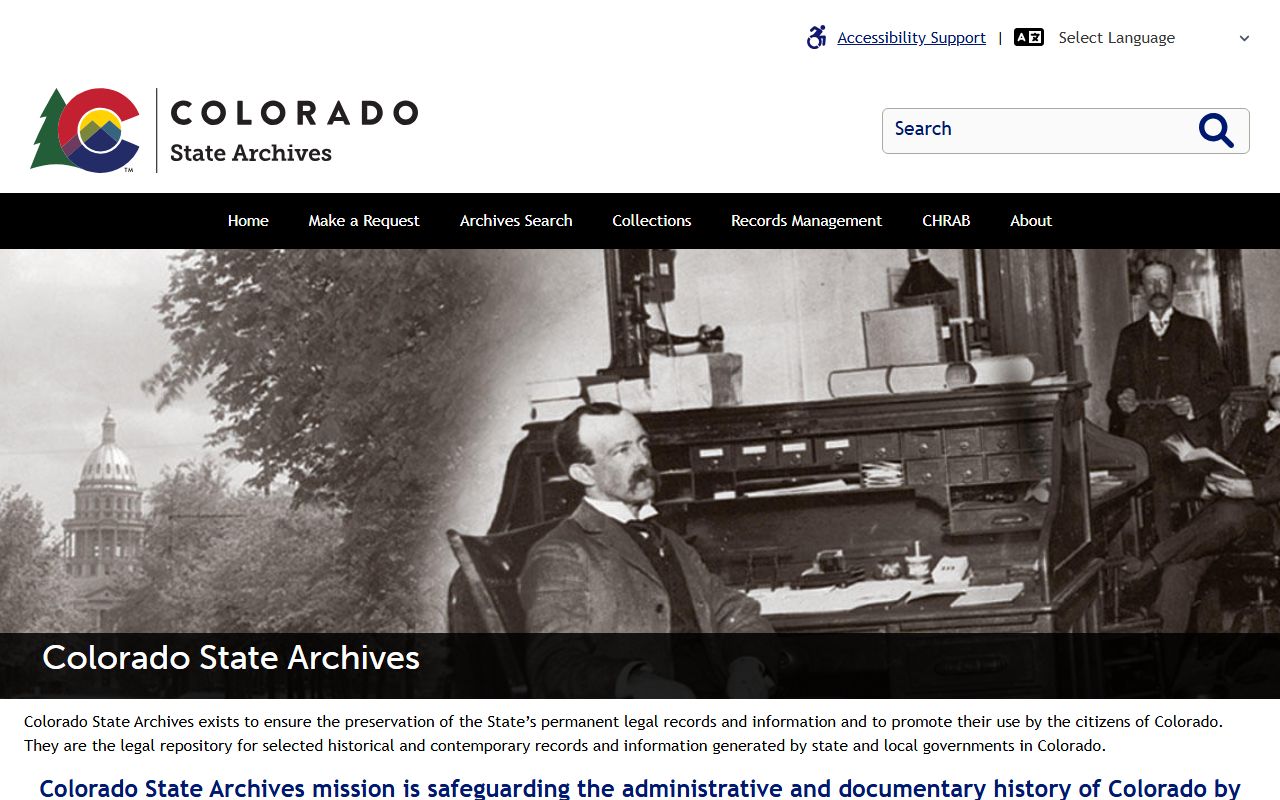
To use the Archives, you must make an appointment in advance by calling 303-866-2358. Walk-in visits are not allowed. Hours are Tuesday through Friday, 10 a.m. to 4 p.m. Many records are searchable online through the Archives website. You can search by county, record type, and date range to see what is available in Colorado.
The Archives holds marriage records from various counties covering the years 1861 to 1952. Divorce records, probate records, and death records also vary by county and year. Check the Archives search page to find out what records exist for the county and time period you need in Colorado.
How to Request Public Records
To request public records in Colorado, start by finding the right custodian. Each agency, county, or office has its own records custodian. You must send your request to the custodian who holds the records you want. Many agencies list their CORA contact on their website. If you are not sure who to ask, call the main office and ask for the records custodian in Colorado.
Your request should be in writing. Include your name, mailing address, and contact info. Describe the records you want in as much detail as you can. Include dates, names, subject matter, and any other facts that help narrow the search. The more specific you are, the faster the agency can find the records in Colorado. You do not have to use a special form in most cases. An email or letter is fine.
Many agencies now use online portals for CORA requests. These portals let you submit a request, track its status, and get notified when records are ready. Examples include NextRequest and JustFOIA. If an agency uses a portal, they will direct you to it on their website in Colorado.
The custodian must respond within three working days under C.R.S. § 24-72-203. They can take seven more days if they need extra time for complex requests. The response may grant your request, deny it with a reason, or ask for more info to find the records. If records are withheld, the agency must cite the law that allows them to do so in Colorado.
Fees for Colorado Public Records
CORA allows agencies to charge fees for research, retrieval, and copying of public records. Under C.R.S. § 24-72-205, the first hour of research and retrieval is free. After that, agencies can charge up to $41 per hour. This rate is adjusted for inflation every five years. Copy fees are $0.25 per page for standard paper copies. Electronic copies sent by email are usually free in Colorado.
Some agencies charge less than the maximum rate. For example, some counties charge $30 per hour instead of $41. Check with the specific agency to find out their fee schedule. Certified copies cost more than plain copies. Most agencies charge $20 for a certified copy of a document in Colorado.
If the cost of your request will be more than $30, the agency may ask for a deposit before they start work. This prevents them from doing hours of work on a request that you might not want to pay for. You can withdraw your request at any time to avoid fees in Colorado.
Fee waivers are not common under CORA. The law does not require agencies to waive fees for low-income requesters or journalists. Some agencies may do so as a matter of policy, but they are not required to in Colorado.
Legal Help and Resources
If you have questions about public records access in Colorado, several resources can help. The Colorado Freedom of Information Coalition offers an open government guide that explains CORA and the Open Meetings Law. This guide is a good starting point for understanding your rights under Colorado law.
The Colorado State Bar can refer you to an attorney if you need legal help with a records request or a denied request. Many lawyers handle CORA cases. If an agency wrongly denies your request, you can file a lawsuit to force them to release the records. The court can order the agency to pay your attorney fees if you win in Colorado.
County and city governments also have their own CORA policies and contacts. Check with the county clerk, city clerk, or county attorney for local guidance. Each county in Colorado handles records requests a bit differently, so it helps to know the local process before you submit a request.
Browse Colorado Public Records by County
Each county in Colorado has its own offices and records. Pick a county below to find local info about public records in that area.
Public Records in Major Colorado Cities
Major cities in Colorado have their own CORA processes. Pick a city below to learn about public records in that area.